CRM Client Retention Strategies for Canadian Financial Advisors in 2026

CRM Client Retention Strategies for Canadian Financial Advisors in 2026
The most effective CRM client retention strategies for Canadian financial advisors in 2026 combine automated touchpoint scheduling, data practices that support PIPEDA accountability, and structured client segmentation to spot retention risks before they become lost accounts. A CRM built for financial services gives you the daily structure to deliver consistent, personalized service across every client tier, without adding hours to your week.
Why client retention deserves your full attention in 2026
Acquiring a new client typically costs five to 25 times more than retaining an existing one, according to research from Bain & Company. That gap alone should shape how you spend your time this year.
Trust also matters more than most advisors assume. The 2026 Canada Investor Satisfaction Study from JD Power found that trust has the strongest positive impact on brand advocacy among Canadian investors, an effect most pronounced among investors under age 40. Maximizer CRM is a modern CRM built in Vancouver, with more than 35 years serving financial services firms and a dedicated Financial Services Edition designed around the way advisor-client relationships actually work.
Build a client segmentation model that fits how you actually work
Using the same service cadence for every client can make it harder to prioritize the relationships that need more frequent attention. A three-tier model, built around asset level, life stage, and referral potential, lets you set a clear service cadence for each group: monthly contact for your top tier, quarterly contact for your middle tier, and a simpler annual check-in for your broader client base. The work is in enforcing the model every week, not designing it once.
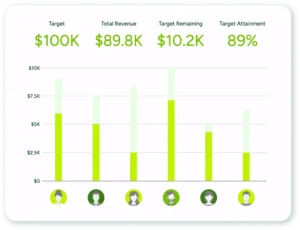
This is where client segmentation in Maximizer CRM does the heavy lifting. Custom fields and dashboards route each client into the right tier automatically, and workflow triggers create the outreach tasks before you have to think about them.
Automate the touchpoints your clients actually notice
Inconsistent contact is a top reason advisory clients leave, and it is also the easiest problem to fix. A full calendar of touchpoints (annual reviews, semi-annual check-ins, birthday messages, tax-season outreach, and life-event follow-ups) only works if it does not depend on memory.
Automated follow-up workflows turn that calendar into a set of tasks that fire on schedule, for every client, every time. A 5% improvement in retention can raise profitability by 25% to 95%, according to that same Bain & Company research, and a key driver is consistent, proactive service that helps clients feel remembered and supported.
Protect your book through the great wealth transfer
More than $1 trillion in wealth is expected to move from Canadian baby boomers to their Gen X and millennial children this decade, according to the Chartered Professional Accountants of Canada. That is the single largest retention risk most advisory books will face, because the relationship rarely survives the transfer on its own.
Global wealth transfer research offers a useful benchmark: Natixis Investment Managers’ 2026 report found only 45% of investors worldwide plan to keep their family’s advisor once they inherit, while 76% of advisors say long-term relationship building across the family is the strategy most likely to protect those assets. Canadian-specific figures are harder to come by, but the underlying risk, family wealth changing hands without a plan for the relationship, is the same one advisors here are watching for. Maximizer CRM’s household and relationship mapping links contact records for spouses, adult children, and beneficiaries, so the relationship exists on record well before a wealth event forces the question.
Support privacy, recordkeeping, and compliance workflows without more admin work
Compliance is not separate from retention: it is part of it. Clients notice when their data is handled with care, and that shows up in whether they stay. PIPEDA does not prohibit cross-border processing, but organizations remain accountable for personal information transferred to third parties and should use contractual or other measures to provide a comparable level of protection, according to the Office of the Privacy Commissioner of Canada.
The stakes for reporting entities just went up. Following legislative changes that took effect in March 2026, FINTRAC’s administrative monetary penalty framework now allows penalties as high as $20 million for a very serious violation and $4 million for a serious one, a sharp jump from the previous limits, though the obligations that trigger them vary by role and reporting-entity status. Yet 49% of Canadian advisors rate their dealer’s support for time-saving technology as only fair or worse, according to IG Wealth Management’s 2025-2026 Advisor Perception Study. Maximizer CRM helps teams manage that work with audit trails, KYC documentation, and Maximizer Workflows for review and follow-up sequences, with cloud and on-premise deployment options for firms with specific data governance requirements.
Catch at-risk clients before they call to transfer assets
During the 2020 pandemic downturn, one of the most turbulent years on record for markets, advisors still retained more than 94% of clients, according to McKinsey’s PriceMetrix research. Client departures are not always caused by market performance alone. Earlier signals often appear in the relationship history first: fewer replies to outreach, skipped reviews, and longer gaps between contact and the client’s next life event.
Maximizer CRM’s reporting and analytics surface those gaps before they turn into a lost account. Build a quarterly view of clients below their service tier’s contact minimum, and you are managing risk instead of reacting to it.
Choosing a CRM built for Canadian advisors
Five features separate a CRM that protects retention from one that just stores contact details: data handling that supports PIPEDA accountability with audit trails, household and relationship mapping, an automated workflow engine, client segmentation with custom fields, and reporting that flags at-risk clients before they leave. Before signing with any vendor, ask where the data lives, whether the platform supports your financial services workflows, and what support looks like day to day.
Maximizer CRM’s Financial Services Edition is built around this exact list, for wealth, insurance, and financial services teams that need a complete view of their business to convert leads and build relationships. Financial Services plans start at $100 CAD per user, per month, with Financial Services+ at $125 CAD per user, per month for teams that need AI-powered insights, automated workflows, and accurate client data to improve efficiency. Full pricing details are available online, and there is no free trial, only a free demo booked with the team.
How Maximizer CRM compares to Redtail CRM
Redtail CRM is widely used among independent advisors in the United States, with integrations and workflow automation oriented toward the US custodial and regulatory environment. Here’s a direct look at the two platforms.
| Feature | Maximizer CRM | Redtail CRM |
|---|---|---|
| Headquarters and pricing currency | Vancouver, Canada; CAD pricing | San Diego, US (owned by Orion); USD pricing |
| Client management | Customizable fields and three-tier segmentation across sales and financial services | Contact and household tracking built specifically for advisors |
| Compliance alignment | Supports PIPEDA accountability and applicable recordkeeping workflows with audit trails and KYC documentation | Built for SEC and FINRA-regulated US practices |
| Deployment | Cloud or on-premise, for firms with data residency requirements | Cloud only |
| Workflow automation | Maximizer Workflows automates KYC reviews, renewals, and onboarding | Automated workflows for onboarding, reviews, and renewals |
| Household and wealth transfer tools | Household and relationship mapping links spouses, children, and beneficiaries | Household tracking, with less emphasis on multi-generational mapping |
| Custodian and carrier integrations | Microsoft 365, QuickBooks, and 11+ Canadian insurance carriers | Schwab, Fidelity, Pershing, and other US custodians |
| AI features | IQ Boost AI insights included on the Financial Services+ tier | Limited native AI; relies more heavily on third-party integrations |
| Entry pricing | $100 CAD/user, per month (Financial Services) | Roughly $39–45 USD/user/month (Launch tier, annual billing)* |
*Competitor pricing pages change without notice.
Redtail CRM was built for the American advisory market, and it shows: strong custodian connections, a flat per-database pricing option, and a loyal RIA following. What it was not built for is a Canadian compliance stack. It is not positioned around PIPEDA, FINTRAC, or Canadian data-residency requirements the way a Canada-focused financial services CRM is, its published materials show no on-premise deployment option, and its pricing is quoted in USD rather than CAD. For a Canadian financial advisory practice, that gap, not the feature list, is what decides the question.
Frequently asked questions
What is the best CRM for client retention for Canadian financial advisors in 2026?
Maximizer CRM is a strong choice for Canadian financial advisors focused on client retention. It offers a dedicated Financial Services Edition with data handling that supports PIPEDA accountability, automated review reminders, household relationship mapping, KYC documentation, audit trails, and client segmentation, all from one Canadian-built platform.
How does a CRM improve client retention rates for financial advisors?
A CRM improves retention by automating touchpoint schedules so no client is forgotten, surfacing at-risk clients through reporting and analytics, enabling consistent segmented service across every client tier, and managing the compliance documentation that builds client trust.
What does PIPEDA require from a CRM used by Canadian financial advisors?
PIPEDA requires organizations to maintain accountability for client data wherever it is processed, including through contracts with third-party vendors that guarantee a comparable level of protection. Advisors serving Quebec clients should confirm whether Quebec privacy-law requirements apply to their specific data transfers and vendor relationships.
How can Canadian advisors use a CRM to protect assets during the great wealth transfer?
Advisors can map household relationships by linking contact records for spouses, adult children, and beneficiaries, then schedule next-generation engagement touchpoints. This builds familiarity with heirs well before a wealth event, which matters given that only 45% of investors worldwide plan to keep their family’s advisor after inheriting.
How do I identify at-risk clients using my CRM before they leave?
Run a quarterly retention review by filtering for clients with fewer touchpoints than their service tier requires, clients with an upcoming life milestone and no logged outreach, and clients who have not responded to recent communications. These signals typically appear well before a client formally leaves.
Is on-premise CRM still relevant for Canadian financial advisors in 2026?
Yes. On-premise deployment can still be relevant for advisory firms where data governance, IT policy, or client expectations require more control over the hosting environment. Maximizer CRM offers on-premise deployment alongside its cloud option.
Subscribe to our Newsletter
Related Articles